Indian Music Experience
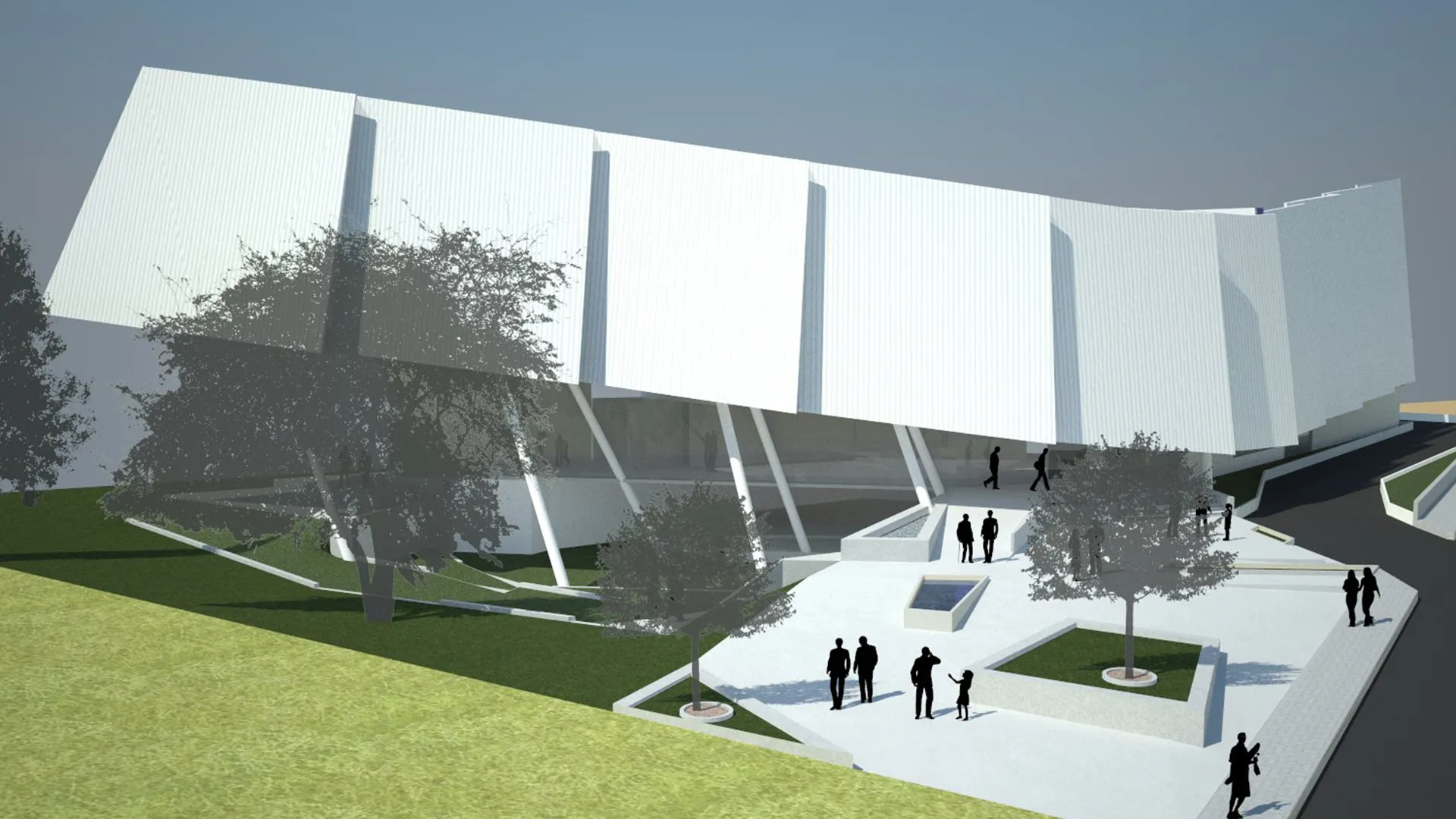
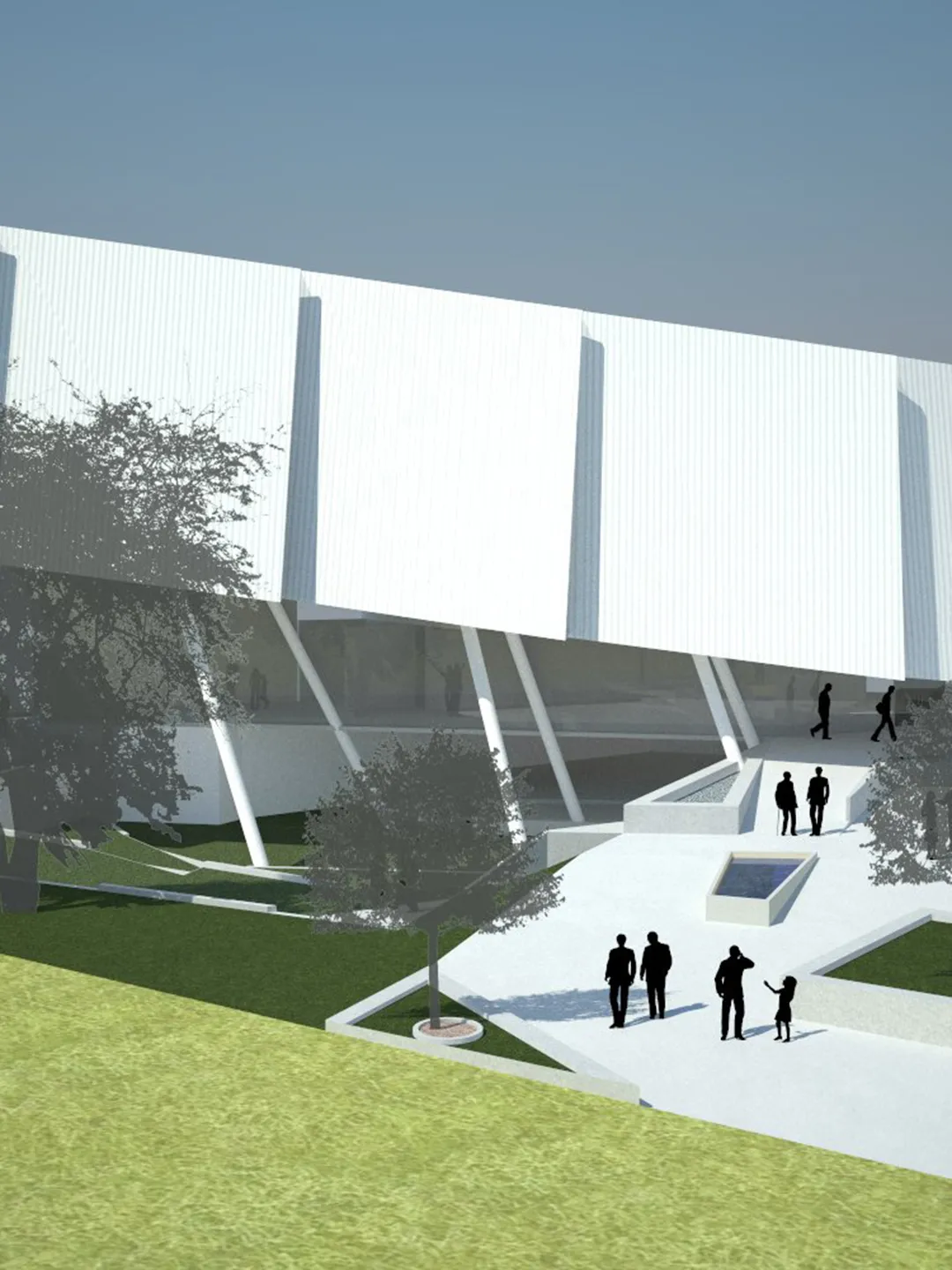
The museum is designed as an immersive place to experience music. Visitors move through galleries that combine sound, light, and material. Spaces support performance, learning, and display. The design allows people to engage with music in different ways, making each visit active, personal, and memorable.
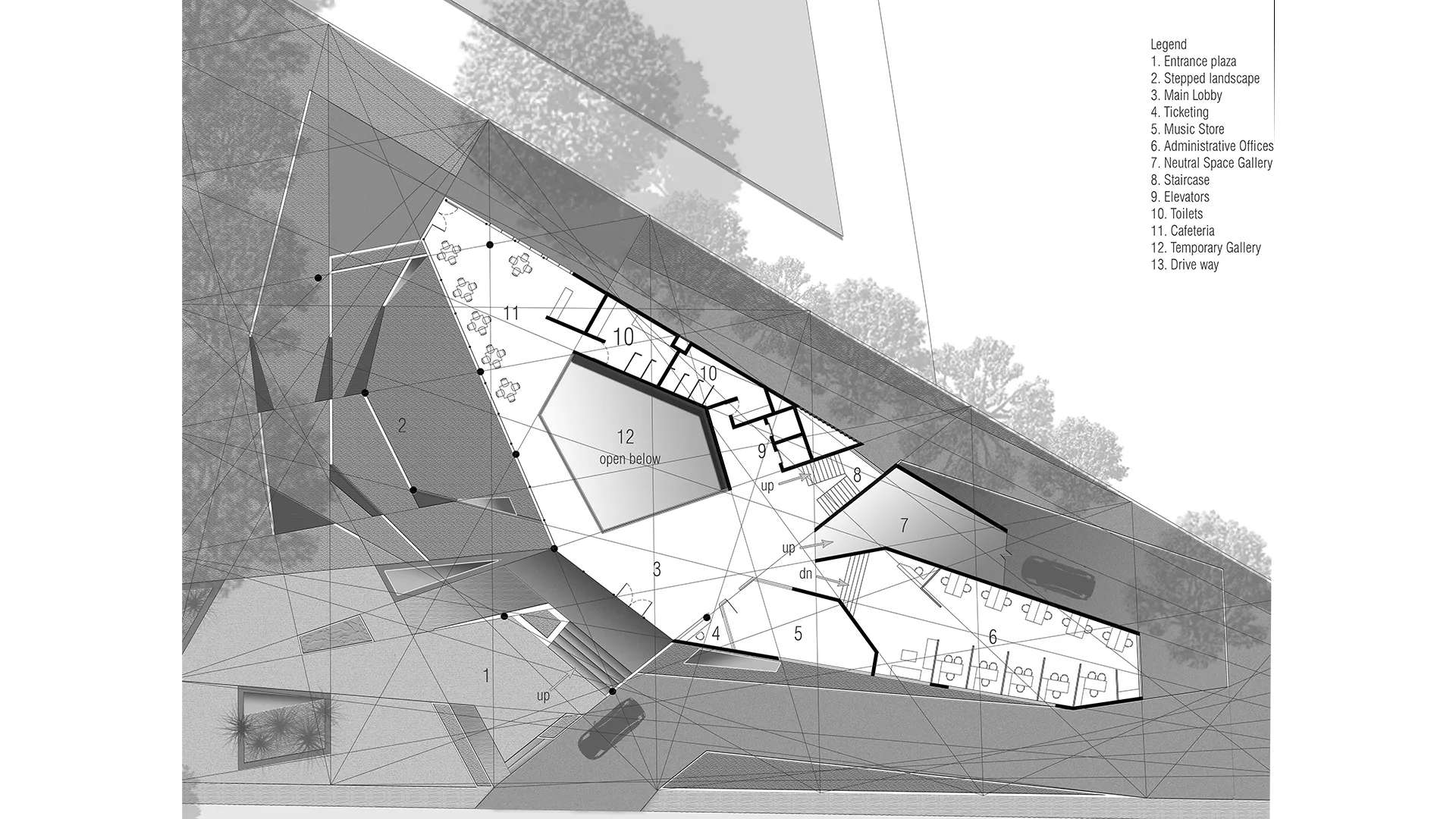
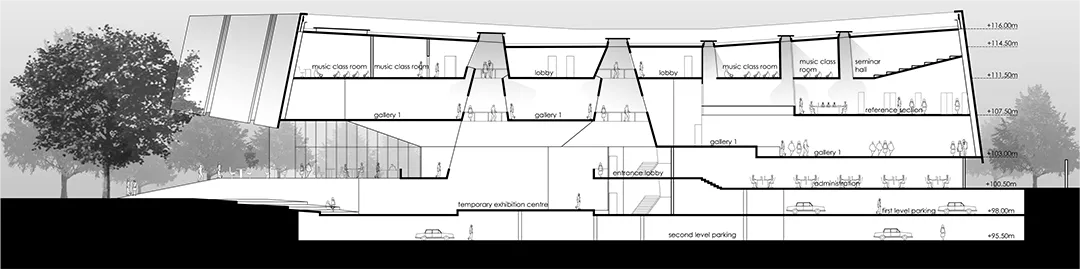
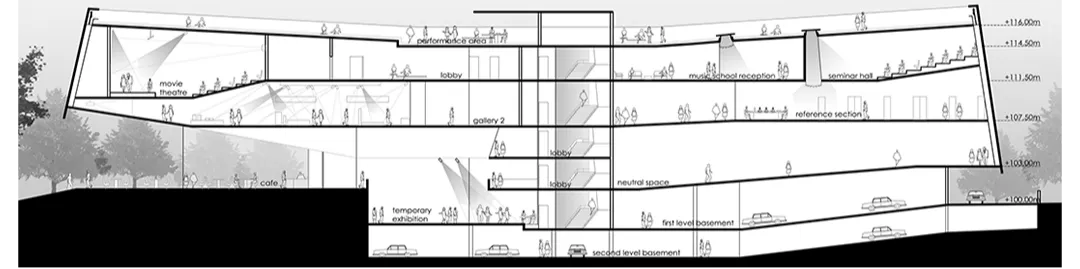
The building has a small footprint and grows vertically. Levels are linked by ramps, steps, and a linear void. Galleries sit on the first and second floors. The music school is on the top level, away from public areas. The ground floor is an open lobby, with a temporary gallery below.
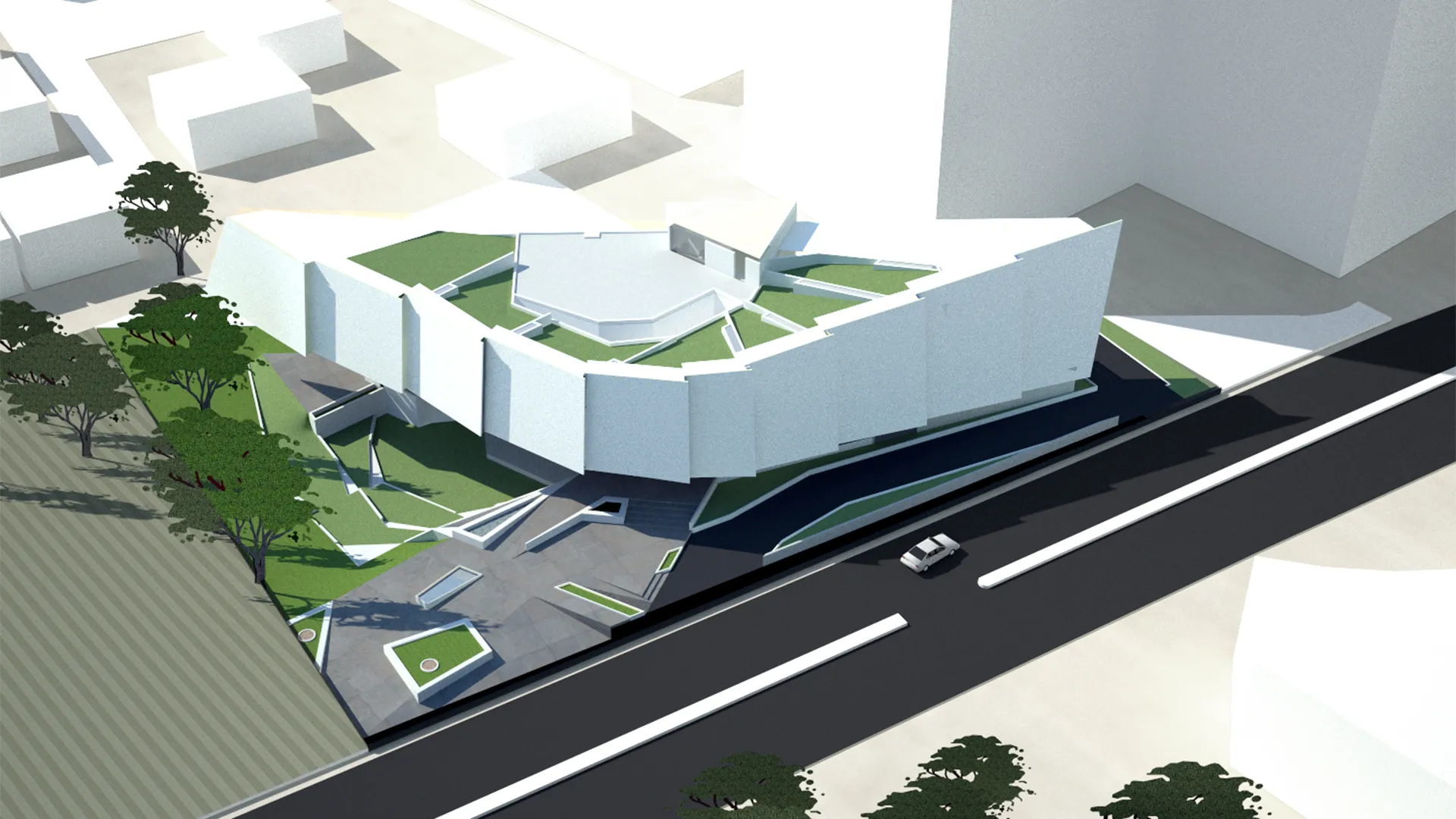
Music is interactive and a museum for experiencing music serves as an interactive space between the outside and inside, the dark and the day-lit, the solid and the void.
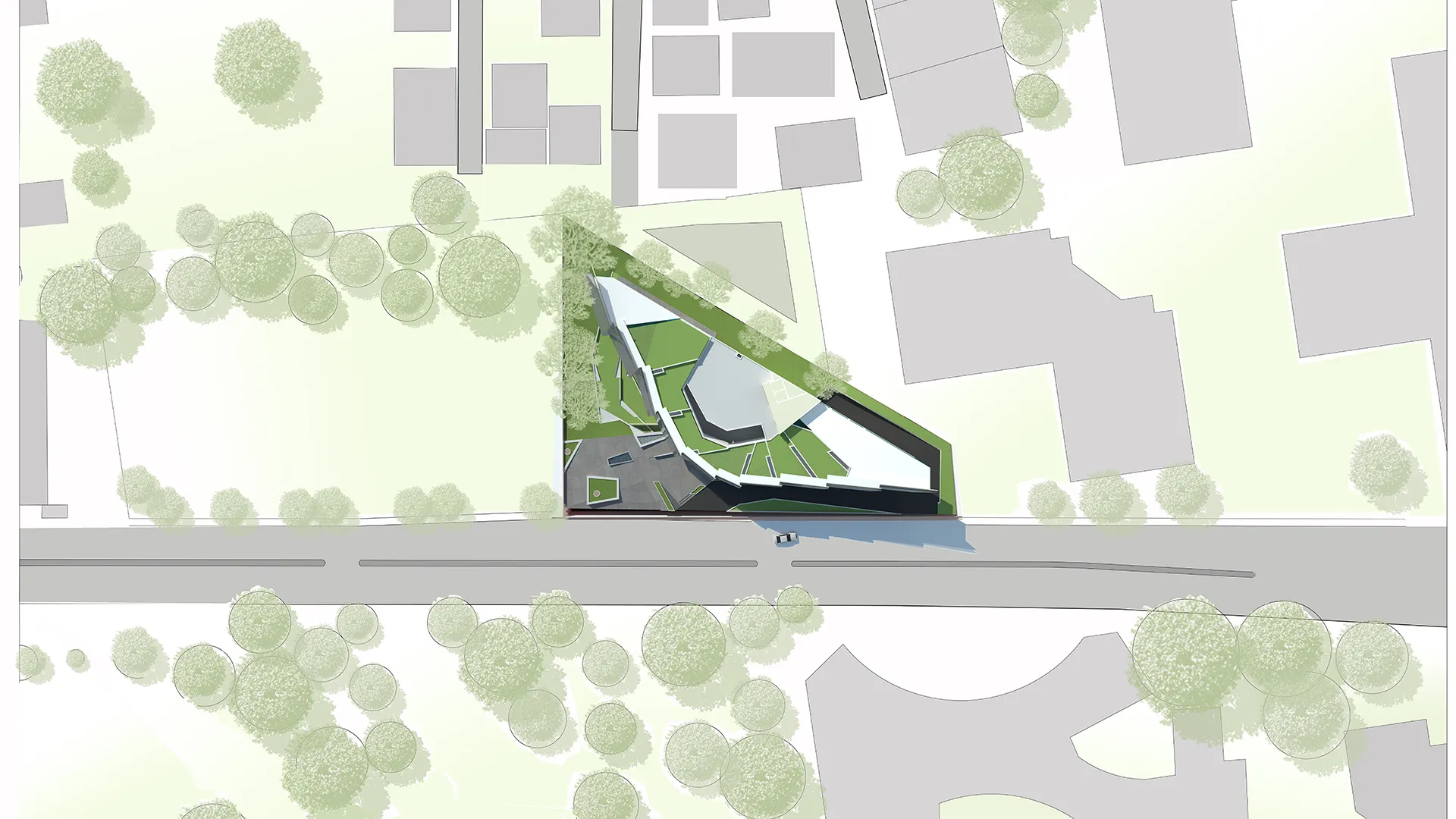
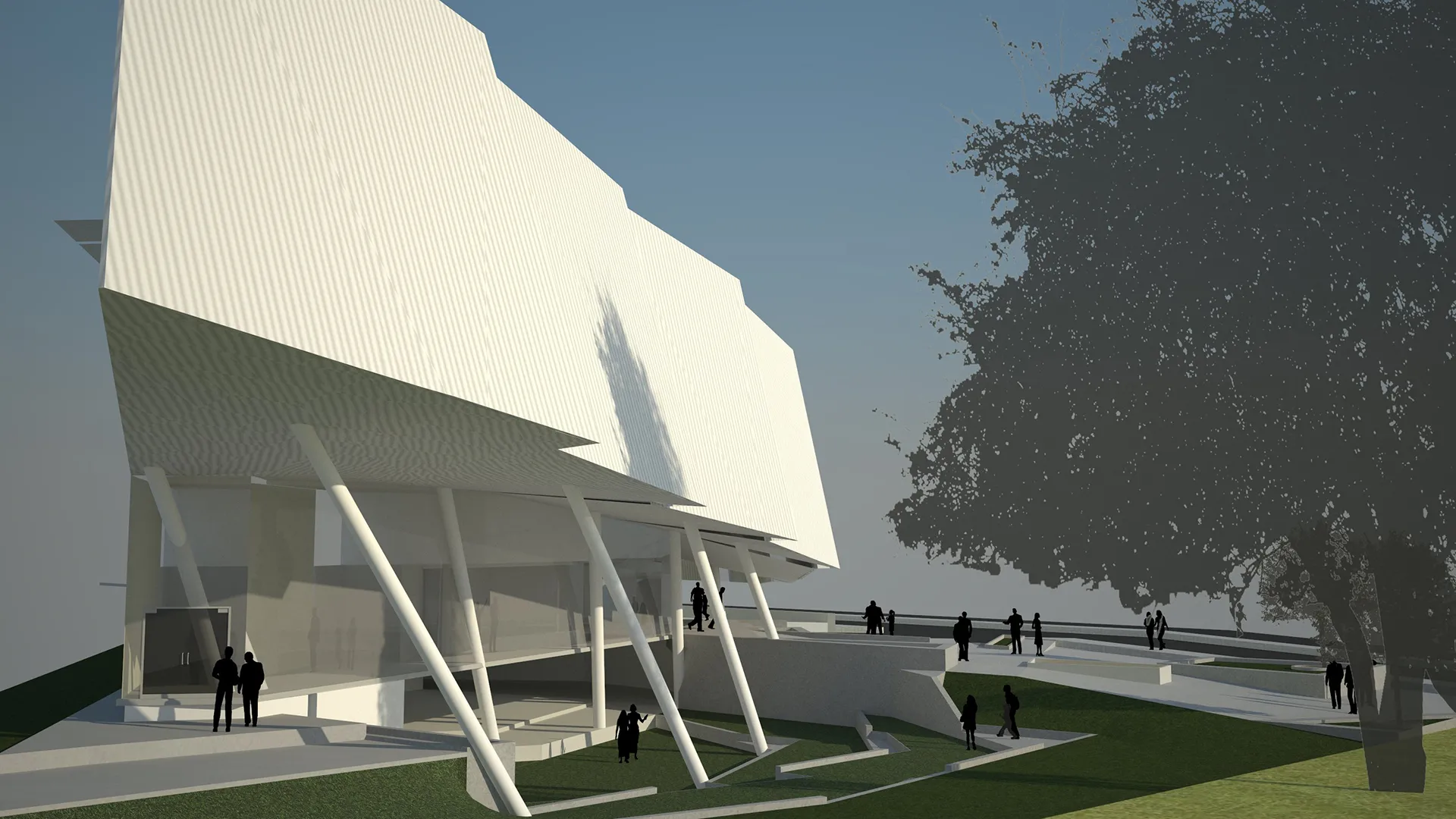
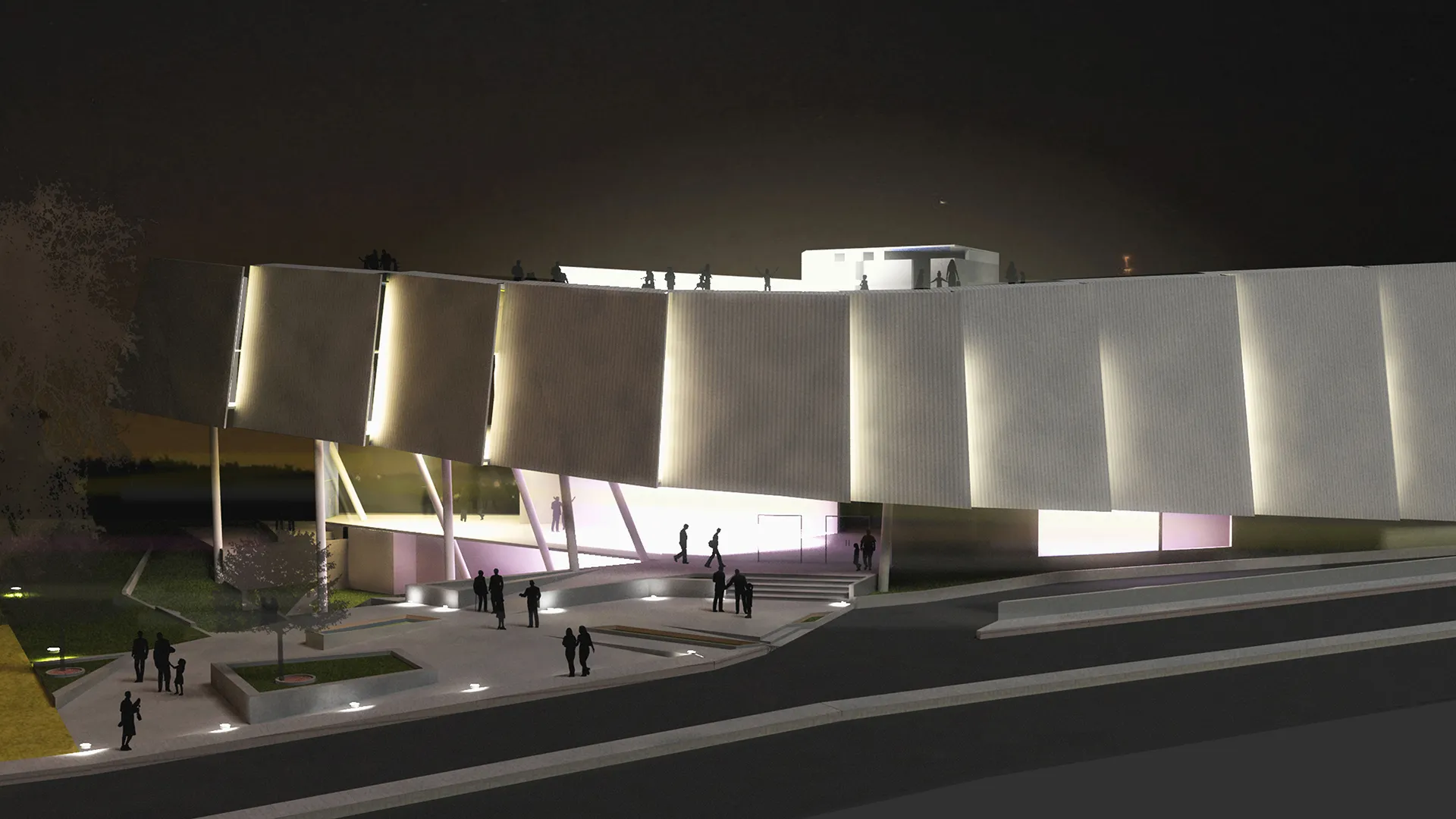
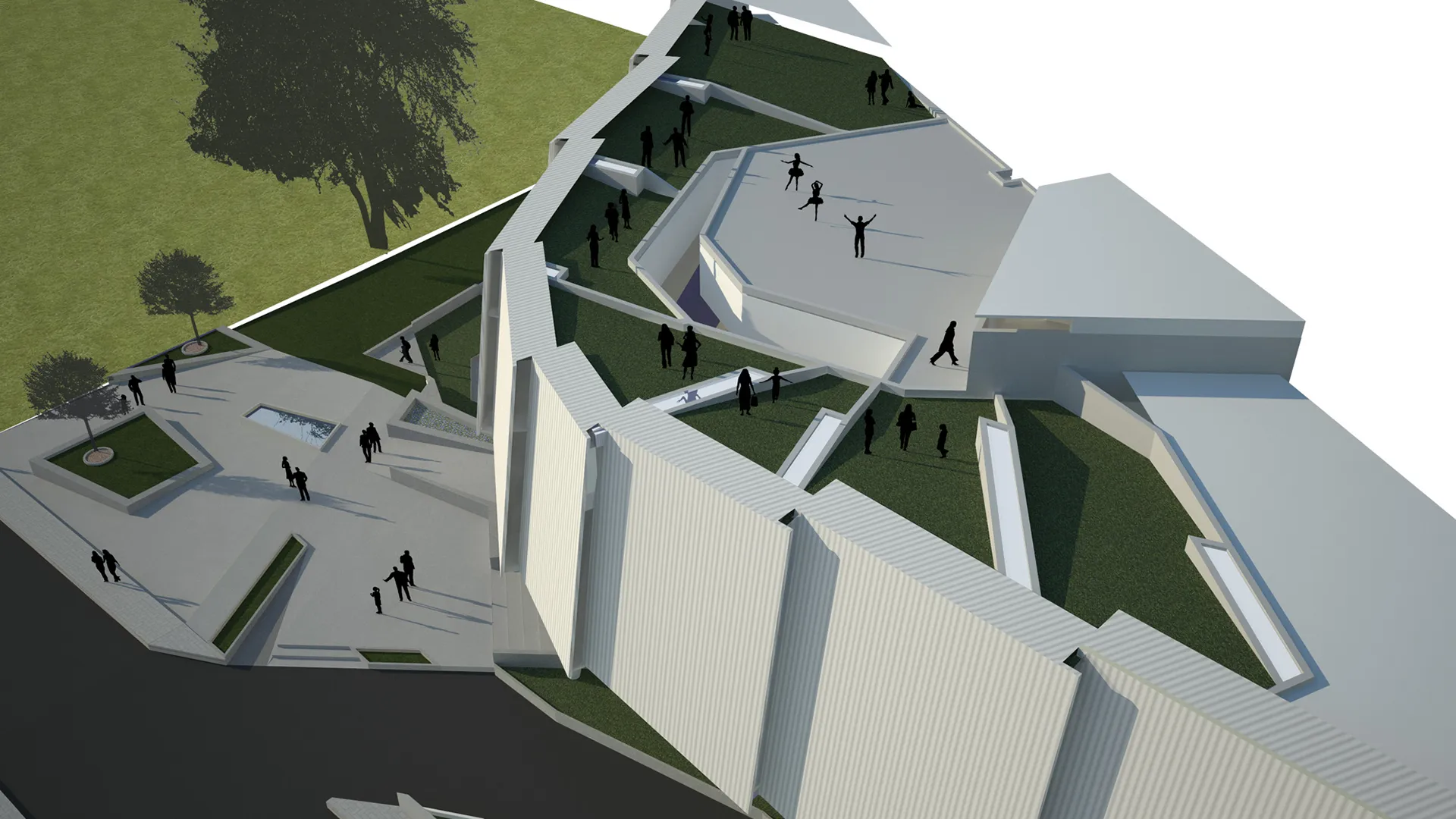
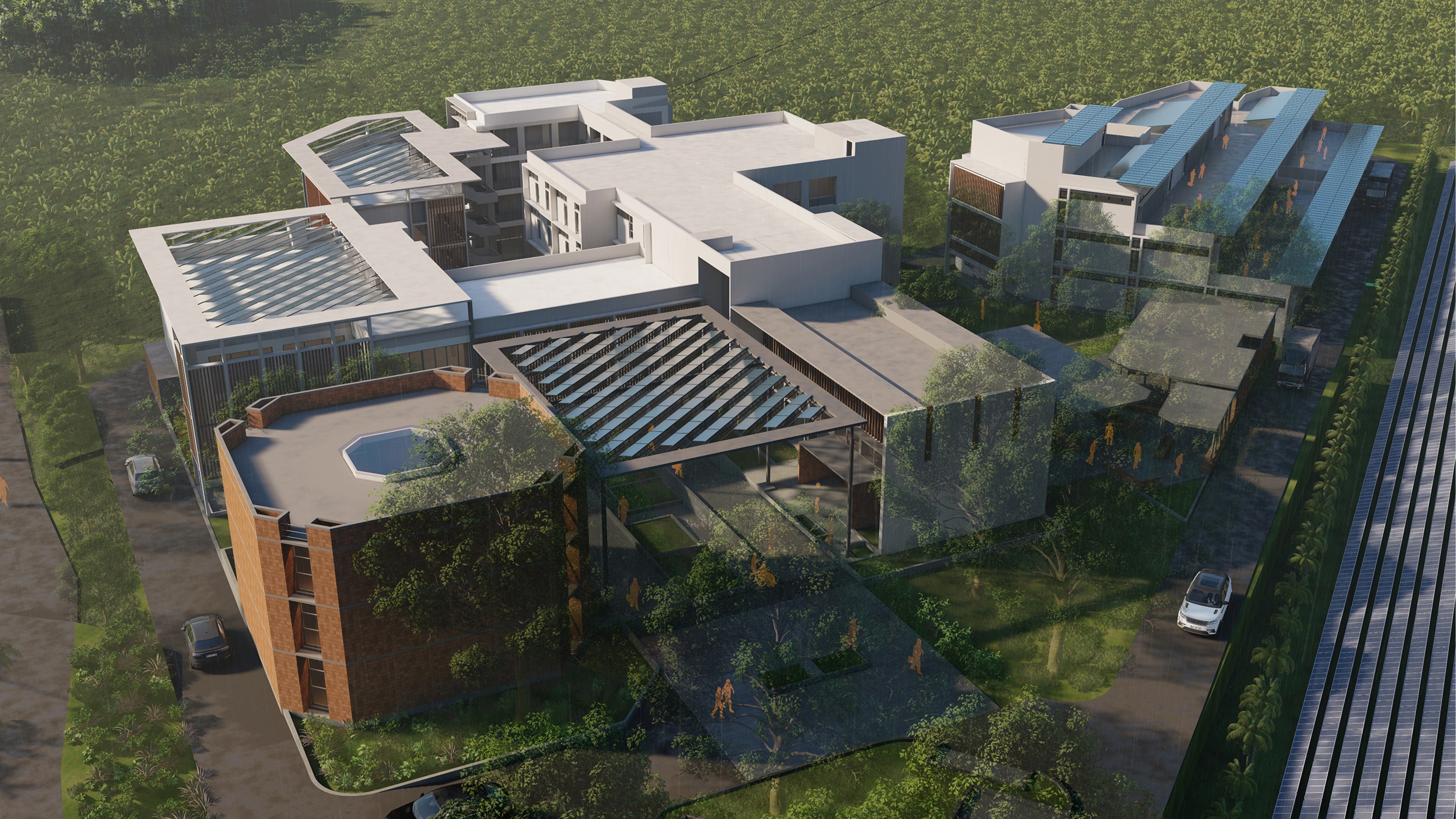
The design takes ideas from the octave and turns them into space. Simple geometry of lines based on the octave guide the plan. The form of the building is created by shifting planes along these lines that respond to trees, entry, and sunlight. These planes lift the building, forming a shaded public space below. This area welcomes people and connects to nature. The trapezoidal site guides the plan. The more opaque looking outer skin filters light into the galleries through slits that separate the planes in the facade. This keeps the spaces calm and protects the exhibits. The result is a clear, simple form that reflects rhythm and movement.